


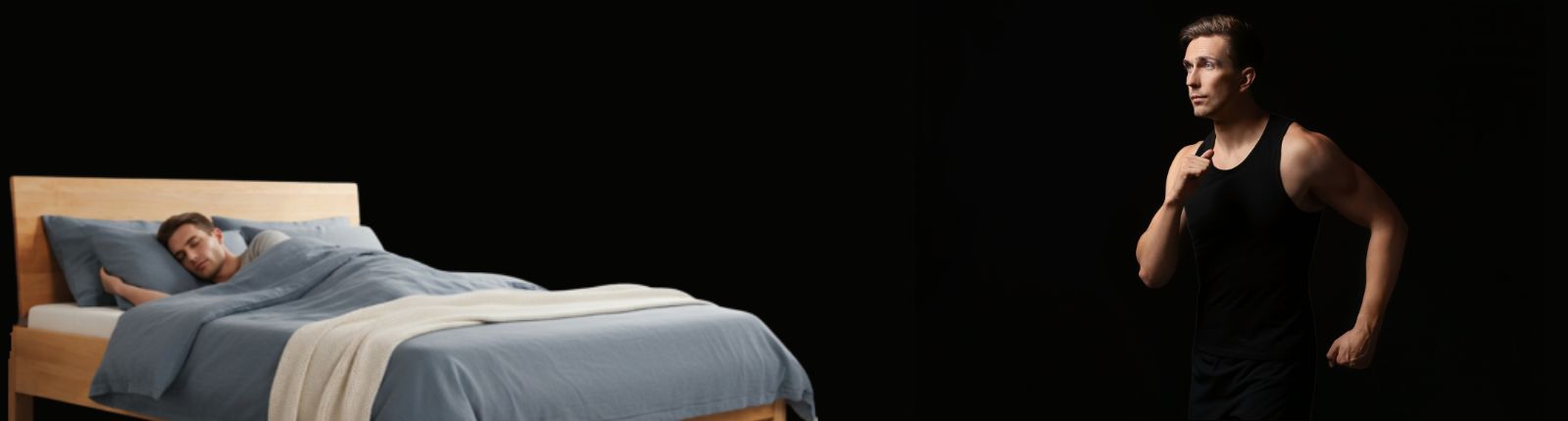
You can train perfectly, eat perfectly, and still plateau—if you’re not sleeping well. Sleep is where your body actually converts training stress into strength, speed, and skill.
This article covers the science behind sleep and athletic performance, from muscle repair and reaction time to practical strategies for sleeping better before competition. Understanding the link between sleep and athletic performance is essential for any serious athlete.
Why Sleep Is the Foundation of Athletic Performance
Your body doesn’t get stronger during a workout. It gets stronger while you sleep. Training breaks down muscle tissue and depletes energy stores, but the actual adaptation—the part where you become faster, stronger, more skilled—happens during recovery.
And the most powerful recovery tool you have is sleep.
During sleep, your body releases growth hormone and repairs damaged muscle fibers. It also locks in the movement patterns you practiced earlier that day.
When you cut sleep short, growth hormone release drops and you interrupt this process.
The work you put in doesn’t translate into results the way it could.
Two terms worth knowing here: sleep duration and sleep quality. Duration is simply how long you’re in bed. Quality refers to how much of that time you spend in the deeper stages of sleep where recovery really takes place.
Both matter, but quality often matters more.
How Sleep Drives Physical Recovery and Muscle Repair
Growth Hormone Release During Deep Sleep
Your pituitary gland releases most of its daily growth hormone during deep sleep, also called slow-wave sleep. This hormone drives tissue repair, muscle growth, and bone density. Without enough time in deep sleep, your body can’t rebuild efficiently, no matter how well you eat or how hard you train.
Muscle Protein Synthesis and Tissue Repair
Every training session creates tiny tears in your muscle fibers. That’s normal and necessary. During sleep, your body repairs those tears and builds the tissue back stronger than before.
Testosterone, which also peaks during sleep, supports this rebuilding process.
Glycogen Restoration and Energy Recovery
Glycogen is stored energy in your muscles, and exercise depletes it. Sleep helps restore those reserves so you wake up with fuel in the tank. This is why a good night’s rest leaves you feeling genuinely recharged rather than just less tired.
- Growth hormone: Peaks during deep sleep and drives tissue repair
- Protein synthesis: Rebuilds and strengthens muscle fibers overnight
- Glycogen restoration: Refills energy stores for next-day performance
- Immune support: Helps control inflammation and defend against illness
How Sleep Shapes Mental Performance and Reaction Time
Reaction Time and Vigilance
Even one night of poor sleep slows your reaction time. For sports that depend on split-second responses—tennis, basketball, baseball, motorsports—that delay can cost you. Your alertness drops, and you simply can’t respond as quickly as you normally would.
Decision Making and Executive Function
Your prefrontal cortex handles judgment, focus, and strategic thinking. It’s also one of the first parts of your brain to suffer when you’re under-rested.
Plays you’d normally read correctly become harder to process. Decisions feel slower and less certain.
Motor Learning and Skill Consolidation
Here’s something many athletes miss: your brain consolidates new skills while you sleep. Motor learning—the process of turning a new technique into automatic movement—happens overnight, not during practice.
Practice introduces the pattern. Sleep locks it in.
Sleep Deprivation and Injury Risk in Athletes
Sleep deprivation changes how you move. When you’re tired, your coordination suffers, your form breaks down, and your reflexes slow. Muscles that haven’t fully recovered are more vulnerable to strains and tears.
Even your ability to heal from existing injuries depends on getting adequate rest.
Research on adolescent athletes has found that those sleeping fewer than eight hours are 1.7 times more likely to suffer injury. The connection makes sense. Under-recovered tissue is weaker tissue.
- Slower reflexes: Delayed response increases collision and fall risk
- Poor coordination: Fatigue compromises movement quality and form
- Reduced tissue resilience: Under-recovered muscles tear more easily
- Impaired healing: Existing injuries take longer to resolve
How Much Sleep Athletes Actually Need
Sleep Needs by Sport and Training Load
Athletes generally benefit from more sleep than the average adult—yet elite athletes average only 6.5 hours per night. The harder you train, the more recovery your body requires. Endurance athletes and those in high-volume training phases often perform best with extended sleep—sometimes well beyond what’s typically recommended for sedentary adults.
There’s no universal number that works for everyone. A better approach is to pay attention to how you feel. If you’re relying on an alarm to wake up every morning, you’re probably not getting enough.
Sleep Needs for Adolescent Athletes
Younger athletes face a particular challenge. Adolescents naturally require more sleep than adults because their bodies are still developing.
At the same time, puberty shifts their biological clocks later, making it harder to fall asleep early. Early school start times often conflict with when their bodies want to rest.
| Athlete Type | Sleep Need | Key Consideration |
| Adult recreational athlete | Standard adult range | Quality matters as much as duration |
| Adult competitive athlete | Above standard range | Match sleep to training intensity |
| Adolescent athlete | Higher than adults | Biological clock shifts later in teens |
What Sleep Extension and Napping Do for Performance
Sleep Extension Before Competition
Sleep extension means deliberately sleeping longer than usual in the days leading up to competition. You’re essentially banking extra recovery before you need it most. Studies on basketball players found that extended sleep improved sprint times, shooting accuracy, and reaction time.
Strategic Napping for Recovery
Naps can supplement nighttime sleep when used thoughtfully. Early afternoon tends to work best, aligning with a natural dip in alertness. Shorter naps help you avoid entering deep sleep, which can leave you groggy if interrupted.
How to Sleep Better Before Competition
- Bank Sleep Days in Advance
Start extending your sleep several days before a big event, not the night before. Pre-competition nerves often make it harder to fall asleep, so building a buffer ahead of time protects your performance when it counts.
- Lock in a Consistent Sleep Schedule
Going to bed and waking at the same time daily helps regulate your circadian rhythm—your body’s internal clock that controls sleepiness and alertness. Consistency trains your body to fall asleep faster and sleep more deeply.
- Manage Caffeine and Late Meals
Caffeine stays in your system longer than most people realize. Avoiding stimulants in the second half of the day gives your body time to clear them before bed. Heavy meals close to bedtime can also disrupt sleep onset and reduce overall sleep quality.
- Wind Down Without Screens
Phones, tablets, and TVs emit blue light, which suppresses melatonin—the hormone that signals your body it’s time to sleep. Stepping away from screens in the hour before bed helps your natural sleep signals work properly.
Sleep Hygiene Habits Built for Athletes
Cool, Dark, Quiet Bedroom Conditions
Your sleep environment directly affects how much time you spend in deep, restorative sleep. Cooler temperatures, complete darkness, and minimal noise create the conditions your body requires to cycle through sleep stages effectively.
Pre-Bed Recovery Routines
Light stretching, breathing exercises, or reading can signal your nervous system to shift from alertness to rest. A consistent routine creates a cue that prepares your body for sleep.
Travel and Circadian Adjustment
Competitive athletes often cross time zones, which disrupts the circadian rhythm. Gradually shifting your sleep schedule before travel and getting sunlight exposure at your destination can help your body adjust more quickly.
The Sleep Environment Built for Athletic Recovery
Your sleep surface plays a larger role in recovery than many athletes realize. A bed that properly supports your spine allows muscles to fully relax, while materials that regulate temperature prevent the overheating that fragments sleep.
Spinal Alignment and Orthopedic Support
When your spine stays in a neutral position throughout the night, pressure points are minimized and muscles can release tension completely. Flexible slat foundations and responsive natural rubber adapt to your body’s contours rather than forcing your body to adapt to the mattress.
Natural Materials and Thermoregulation
Athletes often run hot, and synthetic materials can trap heat and moisture. Natural fibers like wool wick moisture and help regulate temperature throughout the night, keeping you in the comfort zone where deep sleep happens.
Grounding to Reduce Inflammation and Cortisol
Grounding, sometimes called earthing, refers to restoring your body’s connection to the Earth’s natural electrical charge. Some athletes use grounding technology to support inflammation reduction and cortisol regulation during sleep—both relevant to recovery.
SAMINA SPINAL SUPPORT SLATS: Mobile wooden slats that balance pressure and gently stretch the spine during sleep—natural decompression while you rest. LEARN MORE!
LOKOSANA® GROUNDING PAD: A CE-certified medical grounding mat that reconnects your body to the Earth’s negative charge, supporting inflammation reduction and cortisol regulation. LEARN MORE!
How to Track Whether You Are Getting Enough Sleep
Wearables and Sleep Stage Data
Sleep trackers can provide useful data on duration, sleep stages, and disruptions. However, most consumer devices estimate sleep stages rather than measuring them directly. Use the data as one input, not the final word.
Subjective Recovery Signals
Your own body offers reliable feedback. If you consistently wake before your alarm feeling refreshed and maintain steady energy throughout the day, you’re likely getting enough quality sleep. Persistent fatigue, mood changes, or lingering soreness suggest otherwise.
Sleep and Athletic Performance: Putting It All Together
Elite performance requires elite recovery. The hours you spend asleep are not downtime—they’re when your body transforms training into results.
You deserve nothing else.
Frequently Asked Questions About Sleep and Athletic Performance
What is the 10 – 3 – 2 – 1 rule for sleep?
The 10-3-2-1 rule is a sleep hygiene framework. No caffeine 10 hours before bed, no food or alcohol 3 hours before, no work 2 hours before, no screens 1 hour before.
Is seven hours of sleep enough for an athlete?
Most competitive athletes benefit from more than the standard adult sleep recommendation, especially during heavy training phases. If you rely on an alarm to wake up, you may not be getting enough.
Can energy drinks make up for lost sleep?
Caffeine can temporarily mask fatigue but does not replace the restorative processes that occur only during sleep. Overuse can further disrupt your sleep quality.
How long should an athlete nap for optimal recovery?
Shorter naps avoid deep sleep and the grogginess that comes with it, while longer naps can include a full sleep cycle. Timing depends on how much time you have before your next activity.
Does sleep quality affect blood sugar and metabolic health?
Poor sleep disrupts hormones that regulate blood sugar and appetite, which can affect body composition and energy availability for training over time.
